
Last weekend, Kjetil and I, together with his father, drove to beautiful Kragerø to visit his sister Kristin and her husband Torstein at their summer house — a summer ‘hytte’.
The ‘hytte’ culture is uniquely Nordic. While the idea of a country house, or a second home, tends to evoke wealth and luxury in English, this tradition is deeply ingrained in the life of the inhabitants of the region. Mostly modest in size and amenities, these cabins typically pass down from one generation to the next, and families frequently escape the stresses of everyday life in search of a simpler lifestyle near the coast, by the fjords, or deep in the mountains.
Not far from Oslo, Kragerø is a coastal town where Edvard Munch — the expressionist master famous for ‘The Scream’ — spent an important and highly productive period of his life after his nervous breakdown and subsequent treatment. If you compare his works before and after Kragerø, you can see how different his moods are!
Anyway, we spent a lovely long weekend with the people we love and good food. (the equivalent of ‘we had great fun’, which all the teachers strongly advised against when I was in primary school.)
Oscar lay flat on the ground and refused to be picked up when Kjetil tried to put him in the car boot.


Munch: before and after Kragerø – 뭉크: 크라게뢰 전과 후

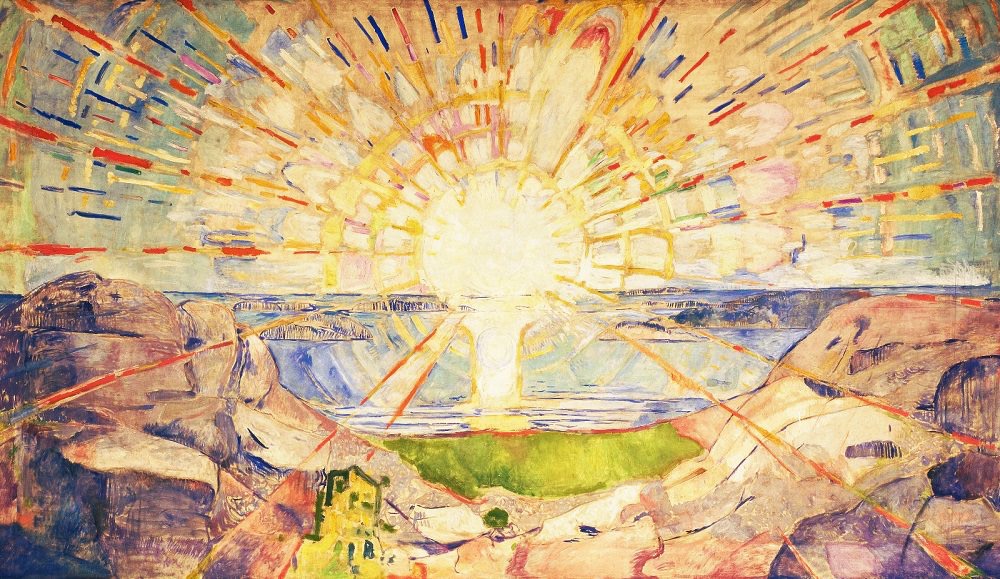
Before · 전
After · 후
공휴일이 낀 주말에 남편과 시아버지를 모시고 시누이 크리스틴의 여름별장이 있는 ‘크라게뢰’로 여행 겸 방문을 다녀왔다.
땅이 좁고 인구가 많은 한국 같은 나라에서는 ‘별장’이라고 하면 왠지 아주 부유한 사람들의 이야기처럼 들린다. 그런데 노르웨이에 살다 보면 ‘여름별장’, ‘겨울별장’은 일상적으로 자주 듣게 되는 말들이다. 노르웨이뿐만 아니라 스웨덴, 덴마크, 핀랜드 등 북구 전체가 다 그렇다. 물론 모든 사람이 다 별장이 있는 것은 아니지만, 철 따라 주말 또는 휴일에 바닷가의 오두막, 산속의 작은 집으로 떠나는 것이 삶의 한 부분처럼 자리 잡고 있다. 비교적 큰 국토에 인구가 얼마 되지 않아 자리가 넉넉해서 그런 것일까.
크라게뢰는 서양 미술의 거장 에드바르드 뭉크가 한때 신경쇠약 치료 이후 요양지처럼 살던 곳으로, 날씨 좋고 아름다운 작은 규모의 해양 도시이다. 실제로 뭉크가 그린 그림을 보면 같은 표현주의이지만, 그 감성이 크라게뢰 전과 후가 현저하게 차이가 난다.
어쨌든 좋은 사람들과 맛있는 것 많이 먹고 잘 쉬다가 돌아왔다. (초등학교 때 일기 쓰며 ‘참 재미있었다’라고 하던 것과 같은 수준이다!)
남편이 오스카를 차 트렁크에 태우려니까 땅바닥에 착 달라붙어서 가기 싫다고 떼를 쓰더란다.